News Search
ROMA-GEM Transnational Work Meeting in Patras Advances Mentorship and Training Tools for Roma Girls
The partners of the Erasmus+ project ROMA-GEM – Roma Girls’ Empowerment through Mentorship met in Patras, Greece, on 14 and 15 February 2026 for a two-day Transnational Partner Meeting (TPM). The meeting brought together the core research and implementation teams responsible for Work Package 3 (WP3), which focuses on the development of the Mentorship Toolkit and Training Curriculum for young Roma women.
News from Erasmus
3.03.2026
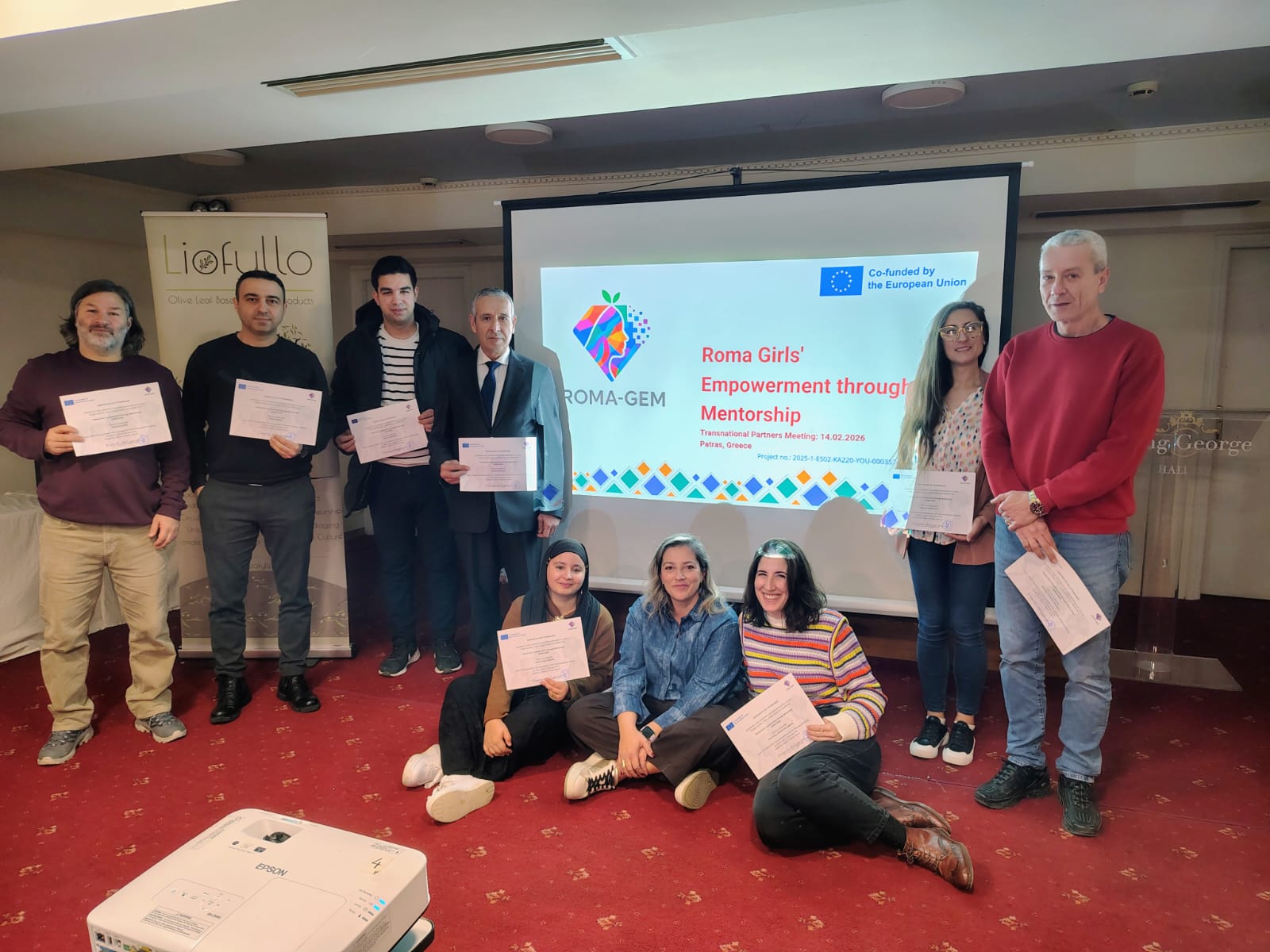
The meeting gathered representatives of JOVESOLIDES (Spain), KAUZI Foundation (Bulgaria), ECO-IN Association (Türkiye), ENERGOI ROMA KOIN.S.EP (Greece) and Liofyllo SCE (Greece). Together, they worked intensively to align national research findings with a common European-level competence framework and a set of modular, learner-centred training tools.

From Evidence to Action: Day One
The meeting opened with a presentation on the overall project progress and the consolidated results of WP2, the Community-Based Participatory Research conducted in partner countries. The data confirmed both the structural barriers Roma girls face – such as early school leaving, care responsibilities, financial pressure and discrimination – and their strong motivation to learn, work and become economically independent.
Building on this evidence, partners moved into a structured WP3 Working Session dedicated to translating needs into competences and learning pathways. Key WP2 follow-up activities were reviewed, including:
-
the establishment of a shared framework on social innovation and sustainability competences,
-
the creation of a common Competence Profile led by Liofyllo and KAUZI Foundation, and
-
the organisation of external validation involving at least ten trainers, educators and industry professionals.
Liofyllo SCE presented the training modules that emerged from national focus groups, covering areas such as social, digital and green entrepreneurship. Partners then worked together to identify overlaps, gaps and priorities, ensuring that all modules align with the agreed competence profiles and respond to the lived realities of Roma girls.
The first day concluded with a consolidation session in which partners agreed on shared terminology, module structure and priority actions for WP3 development.

Designing the Learning Experience: Day Two
The second day focused on shaping the training curriculum and digital learning resources. Liofyllo SCE introduced the proposed structure of the ROMA-GEM course, highlighting how social, digital and green entrepreneurship modules would be combined with mentoring, cultural identity and empowerment elements.
ECO-IN Association presented the concept for the digital learning environment, including video tutorials, e-learning units and interactive worksheets designed to be accessible to learners with varying levels of digital confidence.
A dedicated session led by KAUZI Foundation addressed the external validation of modules and the Mentorship Toolkit, as well as the definition of quality indicators and monitoring processes (IQTs and IQLs) that will ensure the programme meets both project objectives and European quality standards.
Later, partners coordinated the work of the project’s Steering, Quality and Green Committees and discussed the technical requirements.
Shared Vision and Next Steps
The meeting concluded with a final alignment session in which partners confirmed their joint decisions on:
-
the structure of the Mentorship Toolkit,
-
the architecture of the Training Curriculum, and
-
the development of digital learning resources.
A timeline for the next milestones and a follow-up virtual meeting was also agreed.

A Strong Step Forward for ROMA-GEM
The Patras working seminar marked a major milestone for WP3 of the ROMA-GEM project. By combining national research evidence with transnational expertise in mentoring, entrepreneurship, digital learning and community engagement, the partnership laid a solid foundation for tools that will empower Roma girls across Europe.
The agreed competence profiles, training modules and digital resources will now move into the next phase of development and external validation, bringing ROMA-GEM closer to its goal of creating inclusive, future-oriented learning and mentoring pathways for young Roma women.